Why India Is the World's Leading Exporter of Empty Hard Gelatin Capsules
When a pharmaceutical buyer in Dubai, Lagos, or Nairobi needs empty hard gelatin capsules, India is almost always their first call. This is not coincidence. India has built a dominant position in the global capsule export market over several decades — combining manufacturing scale, regulatory rigour, raw material access, and price competitiveness that no other country has matched.
This article from Universe Capsules, a hard gelatin capsule manufacturer and exporter based in India, explains the structural reasons behind India's position and what it means for buyers in the Middle East and Africa.
#2
Largest pharma exporter globally
200+
Countries receiving Indian pharma exports
~40%
Of global generic drug supply from India
3,000+
WHO-GMP certified pharma facilities in India
Key capsule export markets from India
India exports hard gelatin capsules to pharmaceutical manufacturers across the Middle East, Africa, South and Southeast Asia, and Europe.
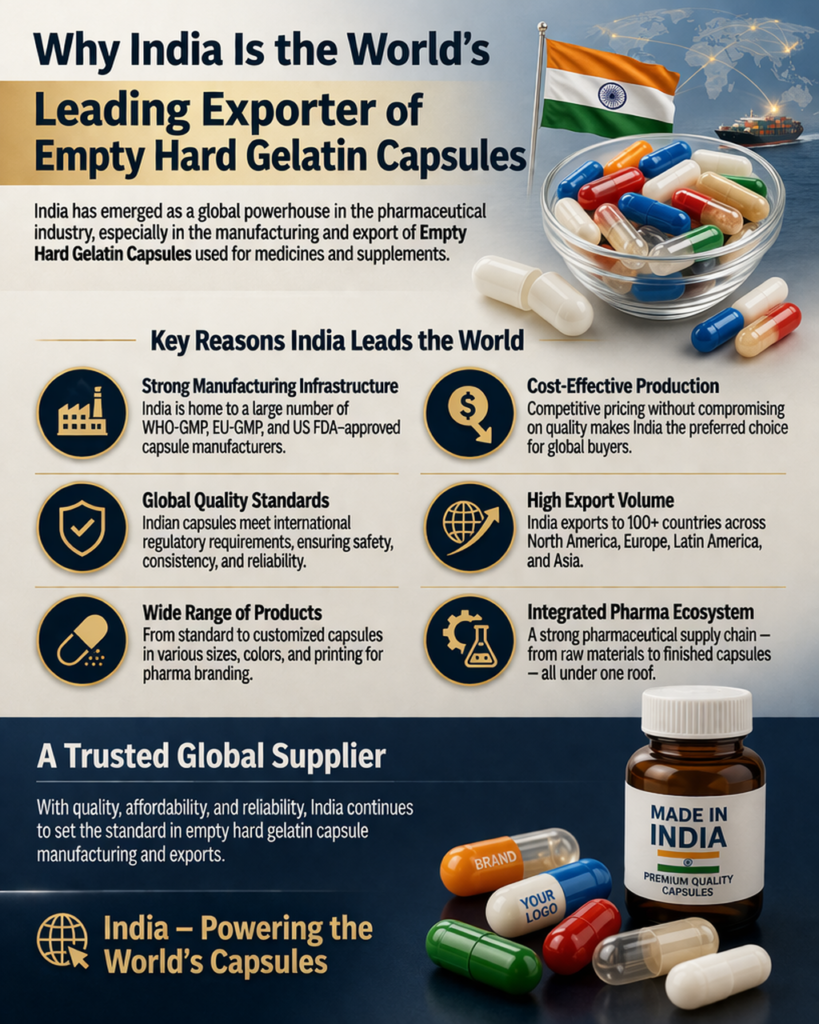
Six reasons India leads the global capsule export market
1. Manufacturing scale
India has dozens of dedicated capsule manufacturers with combined annual production capacity in the tens of billions of capsules. This scale drives unit cost efficiencies unavailable at smaller production volumes.
2. Regulatory framework
The Central Drugs Standard Control Organisation (CDSCO) and Schedule M requirements ensure Indian pharmaceutical manufacturing meets internationally recognised GMP standards — a prerequisite for regulated export markets.
3. Raw material access
India has established supply chains for pharmaceutical-grade gelatin, colouring agents, and capsule manufacturing chemicals — keeping input costs competitive and supply chains resilient.
4. Price competitiveness
Lower manufacturing labour costs and raw material availability give Indian manufacturers a sustained price advantage of 20%–40% over European equivalents at comparable quality grades.
5. Export infrastructure
India's major pharmaceutical manufacturing hubs — Mumbai, Hyderabad, Ahmedabad, Indore — are well-connected to international ports with established freight forwarding and export documentation services.
6. Technical expertise
Decades of pharmaceutical manufacturing have created a deep pool of technical expertise in capsule formulation, quality control, and regulatory affairs — available to buyers through supplier technical support.
How India's pharmaceutical export industry developed
1970s
India's Patents Act reduces dependence on foreign drug patents, catalysing domestic pharmaceutical manufacturing. Early capsule production begins to serve the growing domestic pharma industry.
1980s–90s
Indian pharmaceutical manufacturers begin exporting in volume to developing markets in Africa and Asia, where price-sensitive buyers find Indian quality-price ratio unmatched. Capsule exports grow alongside generic drug exports.
2000s
WHO-GMP certification becomes standard for export-oriented Indian manufacturers. Middle Eastern buyers, particularly in the GCC, begin structured sourcing from India for pharmaceutical raw materials including capsules.
2010s–present
Indian capsule exports continue growing as African pharmaceutical manufacturing expands rapidly. Regional manufacturers in Nigeria, Kenya, South Africa, and Ethiopia increasingly source capsules and raw materials directly from India.
What to look for when sourcing from India
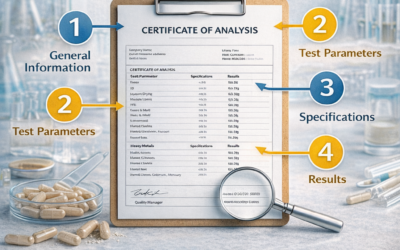
India's strength as a sourcing market does not mean all Indian manufacturers are equivalent. Quality varies significantly. When evaluating an Indian capsule supplier, the minimum requirements are WHO-GMP certification, a batch-specific Certificate of Analysis, and TSE/BSE-free documentation. For Middle Eastern and African markets, current Halal certification is also essential.
Universe Capsules is based in Indore, Madhya Pradesh — one of India's major pharmaceutical manufacturing centres — and manufactures WHO-GMP compliant, TSE/BSE-free, Halal-certified empty hard gelatin capsules for export to pharmaceutical buyers across the Middle East, Africa, and Asia.
Source directly from India with Universe Capsules
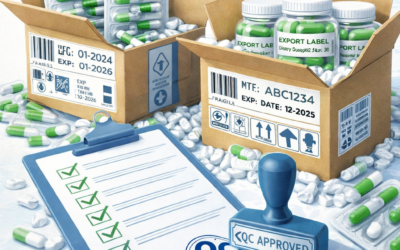
We export pharma-grade empty hard gelatin capsules with full documentation — WHO-GMP certificate, CoA, TSE/BSE declaration, Halal certificate, and shipping documents. Samples available before bulk order.
Frequently Asked Questions
Why do pharmaceutical companies prefer to buy capsules from India?
Indian manufacturers offer competitive pricing, WHO-GMP quality, established export infrastructure, and reliable raw material supply chains — making India the most cost-effective and dependable sourcing market for empty hard gelatin capsules globally.
Which countries import the most capsules from India?
Major markets include UAE, Saudi Arabia, Nigeria, Kenya, South Africa, Sri Lanka, Bangladesh, and Indonesia. Middle Eastern and African markets represent the fastest-growing segment of Indian capsule exports.
Are Indian capsule manufacturers GMP certified?
Reputable manufacturers hold WHO-GMP certification or Schedule M compliance from CDSCO. Some additionally hold USFDA registration. Always verify current certification status before placing a bulk order.
How does India's capsule pricing compare to other countries?
Indian manufacturers typically offer prices 20%–40% lower than European equivalents at comparable quality grades, due to lower labour costs, raw material availability, and manufacturing scale.