Printed Capsules for Pharmaceutical Branding: How Custom Printing Builds Trust and Fights Counterfeiting
In competitive pharmaceutical and nutraceutical markets, the capsule itself is a branding surface. A plain white capsule tells a buyer nothing about the product inside. A printed capsule bearing your brand name, dosage strength, or logo communicates professionalism, builds patient recognition, and creates a barrier against counterfeiting that plain capsules simply cannot.
This guide from Universe Capsules — a printed capsule manufacturer in India — explains how pharmaceutical capsule printing works, what can be printed, and why more manufacturers are making it a standard part of their product presentation strategy.
What Is a Printed Capsule?
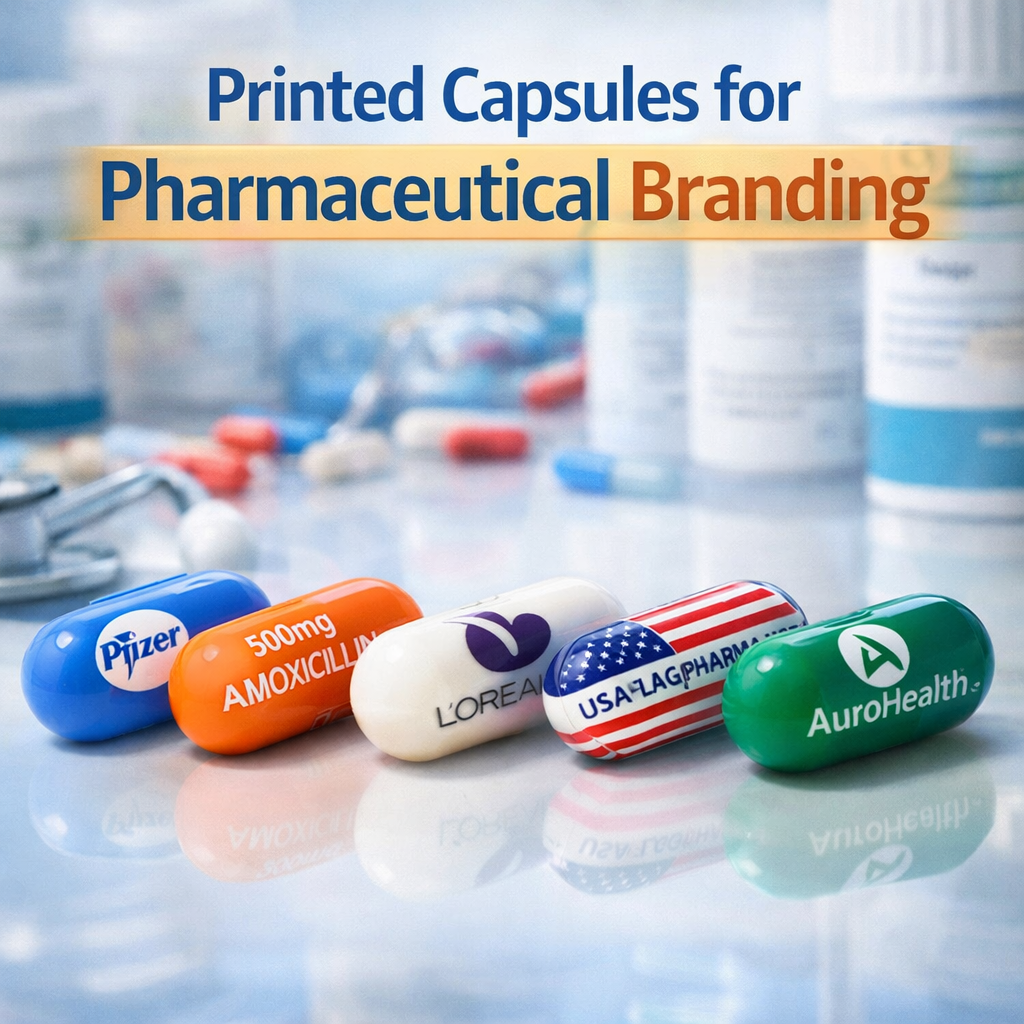
A printed capsule is an empty hard gelatin capsule on which text, numbers, logos, or other identifiers have been applied using pharmaceutical-grade edible inks in a precision rotary printing process. Printing can be applied to the cap, the body, or both, and can include:
- Brand or company name
- Product or drug name
- Dosage strength (e.g. "500 mg")
- Regulatory identifiers or national drug codes
- Batch numbers or serialised codes
- Logos or trademark symbols
Printing does not alter the capsule's pharmaceutical performance — disintegration time, moisture content, and dimensional tolerances remain within specification.
Why Pharmaceutical Companies Choose Printed Capsules
1. Brand identity and patient recognition
Patients who take a medication regularly develop a visual association with its appearance — including the colour, size, and any markings on the capsule. A branded, printed capsule reinforces this recognition at every dose. For pharmaceutical companies building their brand in competitive markets across India, the Gulf, or Africa, a consistently printed capsule is a low-cost, high-visibility branding touchpoint that reaches the patient directly.
2. Differentiation from generic competition
In markets where multiple manufacturers produce the same active ingredient, the visual presentation of the dosage form is one of the few remaining points of differentiation at the pharmacy counter. A printed capsule with your brand name stands out against a plain competitor's product in the same blister pack format — and the presentation quality signals manufacturing credibility to prescribers and pharmacists.
3. Anti-counterfeiting and product authenticity
Pharmaceutical counterfeiting is a serious and growing problem in many markets across sub-Saharan Africa, South Asia, and the Middle East. Plain capsules are trivially easy to counterfeit — a bad actor needs only to source similar-sized capsules in the same colour. Printed capsules raise the barrier significantly, because a counterfeiter must now replicate not only the capsule colour and size but also the font, print placement, ink colour, and any unique identifiers on the shell.
For companies operating in markets with known counterfeiting risk, printed capsules should be treated as a basic anti-counterfeiting measure — not a premium option. Adding batch-specific codes or sequential serialisation to the print takes this further, creating a traceability layer that can be used in enforcement investigations.
4. Regulatory and pharmacovigilance compliance
Several regulatory frameworks require or strongly recommend that pharmaceutical dosage forms carry identifying markings that allow the product to be identified in the event of a recall, adverse event report, or pharmacovigilance investigation. A printed capsule carrying a product identifier allows a capsule found outside its packaging — in a hospital, a home, or a market — to be traced back to its manufacturer and batch. Plain capsules offer no such traceability once separated from the pack.
5. Premium positioning for nutraceuticals and Ayurvedic brands
For nutraceutical and Ayurvedic product companies competing in both domestic and export markets, the visual quality of the product is closely associated with perceived quality by the end consumer. A printed capsule — particularly in a metallic or pearl finish shell with a clean brand name — positions the product at a premium price point relative to a generic-looking plain capsule. Export buyers in the Middle East and African markets consistently associate better capsule presentation with higher product quality.
How Capsule Printing Works
Pharmaceutical capsule printing is performed using a rotary offset printing process before the capsules are packed for shipment. The process at Universe Capsules follows these stages:
- Capsules are fed into the printing machine on a rotating drum that presents each capsule at the correct orientation for the print head
- Pharmaceutical-grade edible ink is transferred from a printing plate or die to the capsule surface in a single pass
- Ink is dried rapidly under controlled conditions to prevent smearing or ink transfer to adjacent capsules
- Printed capsules are visually inspected — either by automated camera systems or trained operators — to reject any capsules with incomplete, misaligned, or smeared print
- Approved capsules are counted and packed into moisture-barrier bags or polythene-lined cartons
The entire printing process takes place in a controlled environment to prevent contamination and maintain the capsule's pharmaceutical-grade integrity.
Design Considerations for Printed Capsules
Getting the best result from printed capsules requires some design planning before production begins.
Text size and legibility
The printable surface area on a capsule is small — particularly on smaller sizes. Text should be concise, using a legible font at a point size that remains readable after printing. Overly complex logos or fine-detail graphics do not reproduce well on curved capsule surfaces at pharmaceutical printing tolerances.
Ink colour contrast
Print visibility depends on the contrast between the ink colour and the capsule shell colour. Dark inks (black, navy, dark green) print most legibly on light capsule colours (white, ivory, light yellow). White or metallic inks are used on darker capsule shells. Discuss your intended capsule colour and print colour combination with Universe Capsules during the design stage to confirm optimal contrast.
Cap versus body printing
Printing can be applied to the cap only, the body only, or both. For a brand name plus dosage strength, a common approach is to print the brand name on the cap and the dosage (e.g. "250 mg") on the body. This distributes information clearly and uses the available print surface efficiently.
Regulatory text requirements
Some markets require specific text or coding on pharmaceutical capsules. Confirm the applicable requirements with your regulatory affairs team before finalising the print design to avoid costly redesign after production has begun.
Printed Capsule Colours and Finishes Available from Universe Capsules
Universe Capsules manufactures printed hard gelatin capsules across a wide range of shell colour combinations, including:
- Standard plain colours — white, ivory, yellow, red, blue, green, and combinations
- Metallic finish capsules — for premium brand presentation
- Pearl finish capsules — subtle lustre finish for nutraceutical and wellness brands
Printing is available on all finish types. Metallic and pearl finish capsules with printed branding represent the premium tier of pharmaceutical capsule presentation and are increasingly used by nutraceutical exporters targeting Gulf and European markets.
Ready to brand your capsules?
Universe Capsules is a printed capsule manufacturer in India supplying pharmaceutical and nutraceutical companies across India, the Middle East, and Africa. We offer printed capsules in plain, metallic, and pearl finish shells, with your brand name, dosage, or logo applied to pharmaceutical standards.
Frequently Asked Questions
What can be printed on a hard gelatin capsule?
Hard gelatin capsules can be printed with brand names, product names, logos, batch numbers, dosage information, and regulatory text using pharmaceutical-grade edible inks. Printing can be applied to the cap, body, or both sides of the capsule.
Does capsule printing affect the quality or safety of the capsule?
No. GMP-compliant printed capsules use pharmaceutical-grade edible inks that do not affect capsule dimensions, moisture content, disintegration time, or fill material compatibility. Universe Capsules prints using inks that comply with applicable pharmacopoeia standards.
What is the minimum order quantity for printed capsules from India?
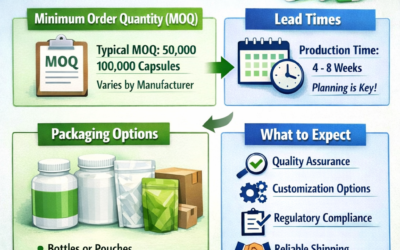
MOQs for printed capsules are generally higher than for plain capsules due to print setup costs. Typical MOQs start from 500,000 capsules per design. Contact Universe Capsules directly to discuss your specific volume requirements.
How do printed capsules help prevent counterfeiting?
Printed capsules are significantly harder to counterfeit than plain capsules, as counterfeiters must replicate specific fonts, print placement, and ink colours. Adding serialised batch codes provides a further traceability layer supporting anti-counterfeiting investigations.
Can capsules be printed in multiple colours?
Yes. Single-colour printing is most common and cost-effective. Multi-colour printing is available for premium brand presentations. Contact Universe Capsules to discuss your specific design and colour requirements.