What Is Pharmaceutical Gelatin? Bovine vs Porcine Sources Explained for Capsule Buyers
Every empty hard gelatin capsule starts life as something far more basic: the bones and hides of animals processed into one of the world's oldest and most versatile biomaterials. Pharmaceutical gelatin is the foundation of the global capsule industry — yet most buyers know very little about where it comes from, how it is graded, and why the source matters enormously for regulated markets.
This guide from Universe Capsules, a hard gelatin capsule manufacturer in India, explains pharmaceutical gelatin from first principles — source materials, quality parameters, and what to verify from your supplier.
From raw material to finished capsule — the gelatin supply chain
Cattle / bovine source
Bones, hides — certified farms
Acid / alkali extraction
Collagen hydrolysis
Filtration and purification
Remove impurities
Pharmaceutical grade gelatin
IP/BP/USP tested
Capsule shell
Finished product
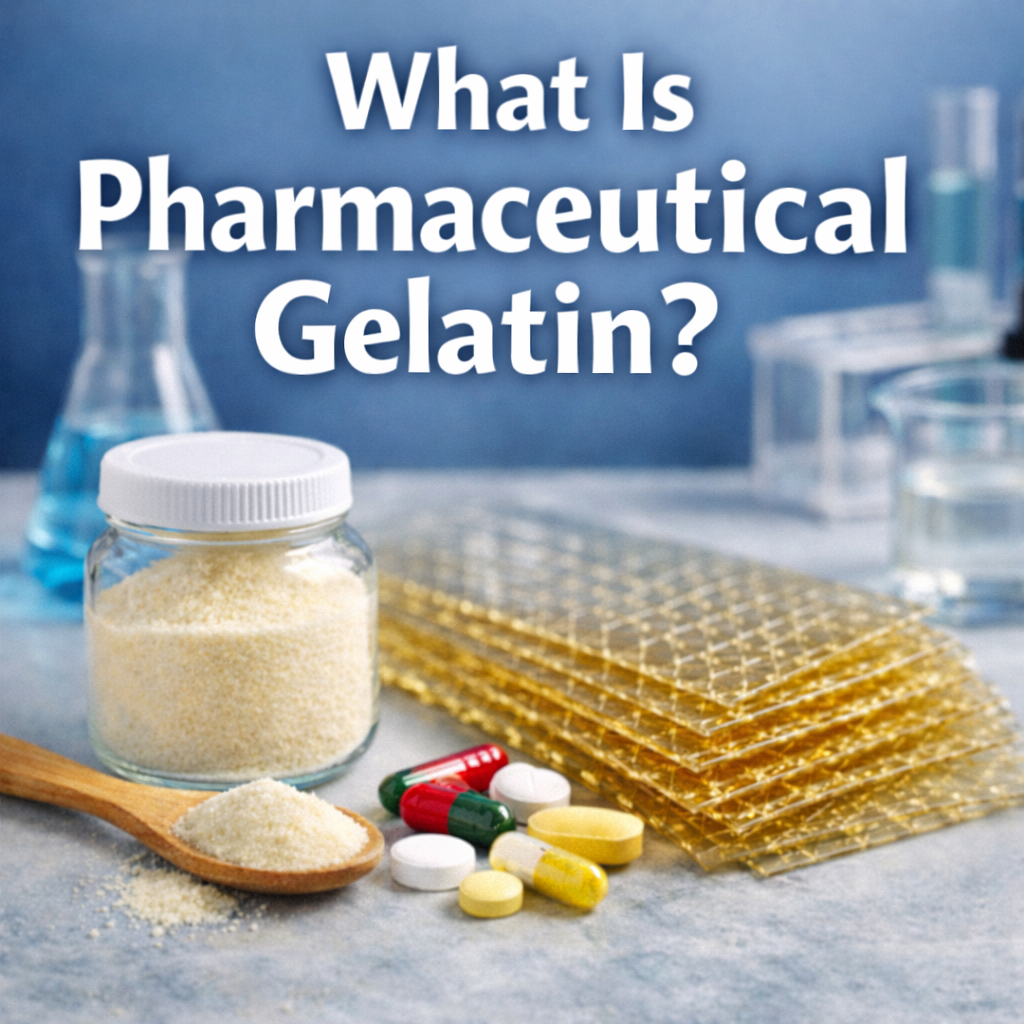
What is pharmaceutical gelatin?
Gelatin is a protein derived by partially hydrolysing collagen — the structural protein found in animal connective tissue, bones, and skin. When collagen is treated with acid (Type A gelatin) or alkali (Type B gelatin) and then subjected to hot water extraction, the triple-helix collagen structure breaks down into gelatin — a mixture of peptide chains that form a clear, tasteless gel on cooling.
For pharmaceutical use, this gelatin must meet strict pharmacopoeia specifications covering purity, heavy metal limits, microbiological quality, viscosity, and bloom strength. Pharmaceutical-grade gelatin is not the same product as food-grade or industrial gelatin — the purity and safety standards are substantially higher.
The two main sources: bovine and porcine
Bovine gelatin (cattle-derived)
- Sourced from cattle bones and hides
- Type B (alkali-treated) most common
- Halal and Kosher certifiable from compliant sources
- Subject to BSE/TSE risk management requirements
- Dominant source for Indian capsule manufacturers
- Acceptable in all pharmaceutical markets globally
Porcine gelatin (pig-derived)
- Sourced from pig skin and bones
- Type A (acid-treated) most common
- Not Halal or Kosher acceptable
- Lower BSE/TSE risk (pigs not susceptible to BSE)
- Dominant in European capsule manufacturing
- Not suitable for Middle East, North Africa, or Kosher markets
Why bovine gelatin dominates Indian capsule manufacturing
India's pharmaceutical export markets are predominantly in regions where Halal compliance is commercially essential — the Gulf Cooperation Council, North Africa, and Muslim-majority populations across sub-Saharan Africa and South Asia. Using bovine gelatin from certified Halal-compliant sources allows Indian manufacturers to serve these markets without formulation changes.
Universe Capsules manufactures empty hard gelatin capsules using pharmaceutical-grade bovine gelatin sourced from certified suppliers with full TSE/BSE-free traceability. Our gelatin is compliant with IP, BP, and international pharmacopoeia standards.
Key quality parameters for pharmaceutical gelatin
| Parameter | Standard specification | Why it matters for capsules |
|---|---|---|
| Bloom strength | 150–250 g | Determines shell mechanical strength and integrity |
| Viscosity | 30–80 mPas (6.67% at 60°C) | Controls capsule shell thickness and uniformity |
| Moisture content | NMT 15% w/w | Affects shelf life and processing performance |
| Ash content | NMT 2% w/w | Measure of inorganic impurity |
| Heavy metals | NMT 50 ppm | Safety — critical for pharmaceutical use |
| Arsenic | NMT 1 ppm | Safety — pharmacopoeia limit |
| Total viable count | NMT 1,000 CFU/g | Microbiological safety |
| TSE/BSE status | Certified free | Regulatory requirement for bovine-derived materials |
Understanding TSE/BSE certification for bovine gelatin
Transmissible Spongiform Encephalopathies (TSE), including Bovine Spongiform Encephalopathy (BSE, commonly called "mad cow disease"), are a category of prion diseases that affect cattle. Although the global incidence of BSE has declined dramatically since the 1990s — largely due to feed restrictions and surveillance programmes — regulatory authorities worldwide require documentary evidence that bovine-derived pharmaceutical materials are sourced from low-risk animals and countries.
For empty gelatin capsules, TSE/BSE risk management involves three layers of control:
- Sourcing gelatin from cattle in countries with negligible or controlled BSE risk status (as classified by the OIE/WOAH)
- Using only specified low-risk tissue types (bones and hides — not high-risk neural tissue)
- Applying an industrial gelatin manufacturing process proven to inactivate prions — the acid/alkali treatment and extraction process used in pharmaceutical gelatin production provides significant prion reduction
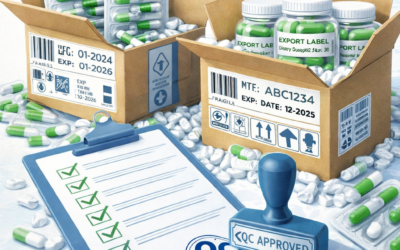
Universe Capsules' gelatin supplier provides a full TSE/BSE-free declaration with source country traceability, which is included in every export documentation package.
What to ask your capsule supplier about gelatin sourcing
- What is the source species — bovine or porcine?
- What country is the gelatin sourced from?
- Is a TSE/BSE-free declaration with source country available?
- What bloom strength is the gelatin used in production?
- Is the gelatin certified Halal? By which certifying body?
- Is the gelatin pharmacopoeia-compliant (IP/BP/USP)?
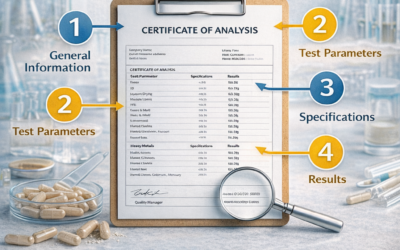
- Can you provide the gelatin supplier's CoA or specification?
A professional capsule manufacturer should be able to answer all of these questions immediately and provide documentation on request.
Want full gelatin sourcing documentation with your capsules?
Universe Capsules provides TSE/BSE-free declarations, Halal certificates, and full gelatin source traceability as standard with every export order. Our bovine gelatin meets IP, BP, and international pharmacopoeia specifications.
Frequently Asked Questions
What is pharmaceutical gelatin made from?
Pharmaceutical gelatin is made by hydrolysing collagen extracted from cattle or pig bones and hides. The collagen is acid- or alkali-treated, extracted, filtered, and dried to produce pharmaceutical-grade gelatin meeting strict pharmacopoeia specifications.
What is the difference between bovine and porcine gelatin in capsules?
Bovine gelatin comes from cattle; porcine from pigs. Both produce equivalent capsules functionally. The critical difference is religious acceptability — porcine is not Halal or Kosher compliant. Most Indian manufacturers use bovine gelatin.
Is bovine gelatin safe for pharmaceutical capsules?
Yes, subject to TSE/BSE certification and pharmacopoeia compliance. Pharmaceutical-grade bovine gelatin is the global standard for hard gelatin capsule manufacturing and is fully safe when sourced from certified, traceable suppliers.
What does bloom strength mean for pharmaceutical gelatin?
Bloom strength measures gel firmness — the weight required to depress a standard plunger 4mm into a gelatin gel. For capsule manufacturing, 150–250g bloom strength produces shells with the correct mechanical properties and disintegration characteristics.