How to Select the Right Capsule Size for Pharmaceutical Manufacturing
Selecting the correct empty capsule size is one of the most important decisions in pharmaceutical product development. Whether you are a formulator, contract manufacturer, or pharma buyer in the Middle East or Africa, the capsule size you choose directly impacts dosage accuracy, patient compliance, filling efficiency, and regulatory approval.
This guide from Universe Capsules — a trusted empty capsule manufacturer in India exporting to global markets — explains the key factors involved in capsule size selection and how to make the right choice for your formulation.
Why Capsule Size Selection Matters
Capsule size affects every step of the pharmaceutical manufacturing process — from API fill weight to automated filling machine compatibility. An incorrect capsule size leads to:
- Under-filling or over-filling of active ingredients
- Poor patient compliance, especially in paediatric or geriatric formulations
- Rejection of consignments at export checkpoints in GCC and African regulatory bodies
- Increased production waste and costly downtime
Standard Capsule Sizes: A Complete Reference
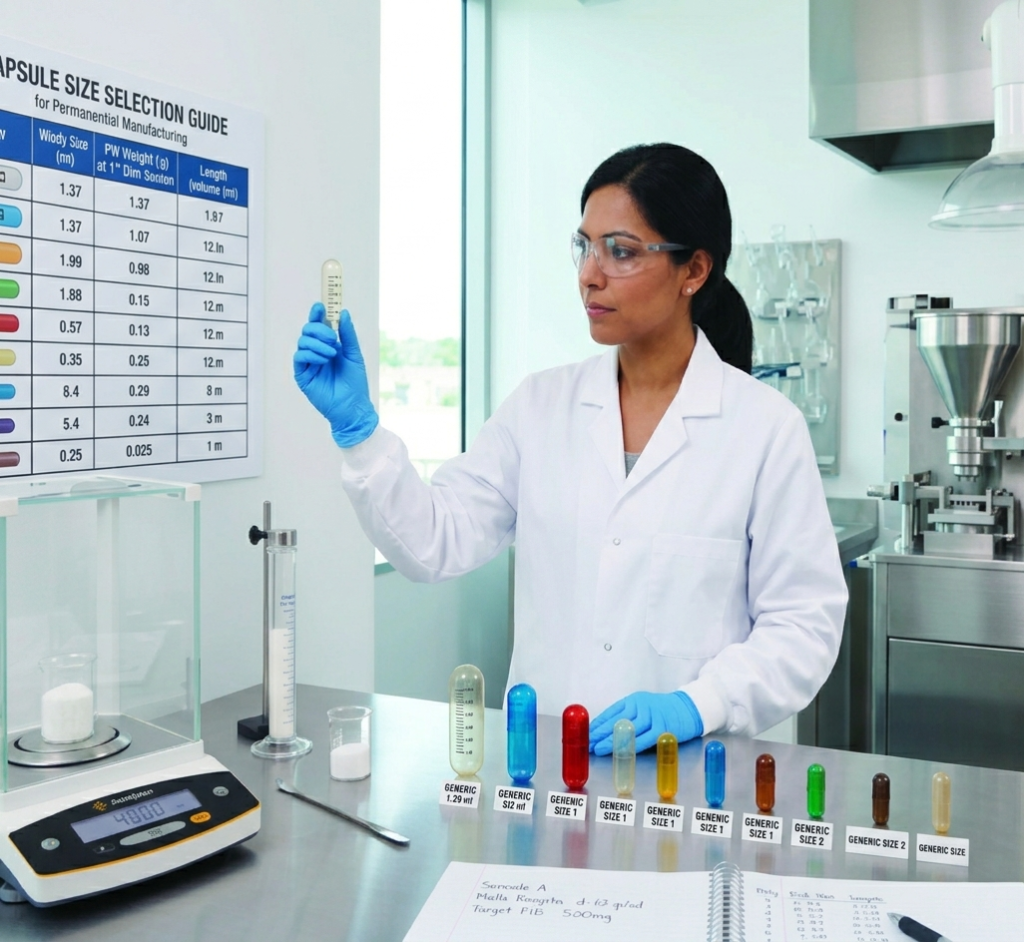
Hard gelatin and HPMC capsules are available in sizes ranging from 000 (largest) to 5 (smallest). The table below provides standard fill volumes and typical applications:
| Size | Volume (ml) | Fill weight (mg)* | Typical use cases |
|---|---|---|---|
| 000 | 1.37 | 800–1,600 | High-dose supplements, bulk powders, veterinary formulations |
| 00 | 0.91 | 500–1,000 | High-dose APIs, nutraceuticals, Middle East supplement market |
| 0 | 0.68 | 350–700 | Most common pharma size; general-purpose OTC and Rx products |
| 1 | 0.50 | 250–500 | Antibiotics, anti-inflammatories; widely used in African markets |
| 2 | 0.37 | 180–400 | Paediatric formulations, low-dose APIs |
| 3 | 0.27 | 130–280 | Low-dose active ingredients, paediatric use |
| 4 | 0.20 | 100–200 | Very low-dose APIs, speciality compounds |
| 5 | 0.13 | 60–130 | Micro-dosing, research formulations |
* Fill weight varies by the bulk density of the formulation powder or granule.
Key Factors When Choosing Capsule Size
1. API fill weight and bulk density
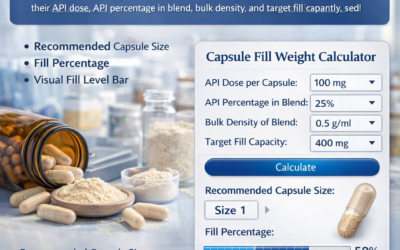
The most critical factor is how much active pharmaceutical ingredient (API) your formulation requires per dose. Calculate the fill weight by dividing your target dose by the bulk density of your powder blend. This gives you the required capsule volume, from which you select the appropriate size.
2. Patient population and swallowability
For pharmaceutical buyers in the Middle East and Africa, patient demographics matter. Paediatric and elderly patients often require smaller capsule sizes (size 2–4) to ensure ease of swallowing and dosing compliance. Size 0 and 00 are standard for adult populations across GCC and sub-Saharan African markets.
3. Filling machine compatibility
Your capsule size must match the tooling specifications of your encapsulation equipment. Universe Capsules supplies export-quality empty capsules in all standard sizes, compatible with major filling machine brands used across pharmaceutical facilities in Saudi Arabia, UAE, Nigeria, Kenya, and South Africa.
4. Gelatin or HPMC capsule type
Both hard gelatin capsules and HPMC vegetarian capsules are available in identical size ranges. For markets with halal certification requirements — which includes most of the Middle East and significant portions of Africa — HPMC capsules or halal-certified gelatin capsules from Universe Capsules are the recommended choice.
Capsule Size Standards in Middle East & Africa Pharma Markets
Pharmaceutical importers and manufacturers in the Gulf Cooperation Council (GCC), East Africa, and West Africa follow ICH and WHO guidelines for capsule standards. Key considerations for these regions include:
- Halal or kosher certification requirements for gelatin-based capsules
- Stability in high-temperature and high-humidity climates (HPMC capsules preferred in tropical African markets)
- Compliance with NAFDAC (Nigeria), SFDA (Saudi Arabia), MOH (UAE), and PPB (Kenya) import specifications
- Bulk supply capability with consistent lot-to-lot quality documentation
Universe Capsules manufactures and exports pharma-grade empty capsules that meet these regional compliance standards, with full documentation support for regulatory submissions.
Step-by-Step: How to Choose the Right Capsule Size
Follow this process to arrive at the correct capsule size for your pharmaceutical or nutraceutical formulation:
- Determine your target dose per unit — confirm the required API quantity in milligrams per capsule.
- Measure the bulk density of your blended powder — expressed in g/ml, this is done by a tap density test.
- Calculate required fill volume — Fill weight (g) ÷ Bulk density (g/ml) = Required volume (ml).
- Match to the size chart — select the capsule size whose volume is closest to your calculated volume, targeting 80–90% fill capacity for optimal sealing.
- Confirm patient and swallowability requirements — adjust to a smaller size if needed for paediatric or elderly populations.
- Request samples from Universe Capsules — conduct filling trials before committing to bulk orders.
Need capsule samples for your formulation?
Universe Capsules supplies export-quality empty gelatin and HPMC capsules in all standard sizes. Contact us for bulk pricing, certifications, and free samples for Middle East and African pharmaceutical manufacturers.
Frequently Asked Questions
What is the most commonly used capsule size in pharmaceuticals?
Size 0 is the most widely used capsule size in pharmaceutical manufacturing globally, offering a volume of 0.68 ml and accommodating fill weights between 350–700 mg. It is compatible with most standard encapsulation equipment and commonly used for OTC and prescription products across Middle East and African markets.
Which capsule size is best for high-dose formulations?
For high-dose formulations, sizes 000 and 00 are recommended. Size 000 can hold up to 1,600 mg of powdered API, making it suitable for bulk supplement products and veterinary formulations. Size 00 is a popular choice for high-dose nutraceuticals exported to the Gulf region.
Are HPMC capsules available in the same sizes as gelatin capsules?
Yes, HPMC (hydroxypropyl methylcellulose) vegetarian capsules are manufactured in the same size range as hard gelatin capsules — from size 000 to size 5. Universe Capsules supplies both types, with HPMC capsules being particularly suitable for halal-compliant markets in the Middle East and humid tropical climates in Africa.
How do I calculate the capsule size I need?
Divide your required fill weight (in grams) by the bulk density of your powder blend to get the required capsule volume in millilitres. Then match this volume to the standard capsule size chart, selecting a size that uses 80–90% of the capsule's rated capacity. Universe Capsules can provide technical assistance to help your team with this calculation.
Do capsule sizes differ between manufacturers?
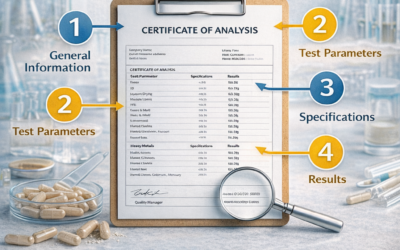
Minor dimensional tolerances can exist between manufacturers, but all reputable suppliers including Universe Capsules produce capsules conforming to international pharmacopoeia standards. Always request a certificate of analysis and compatibility report when switching capsule suppliers to ensure filling machine and formulation compatibility.