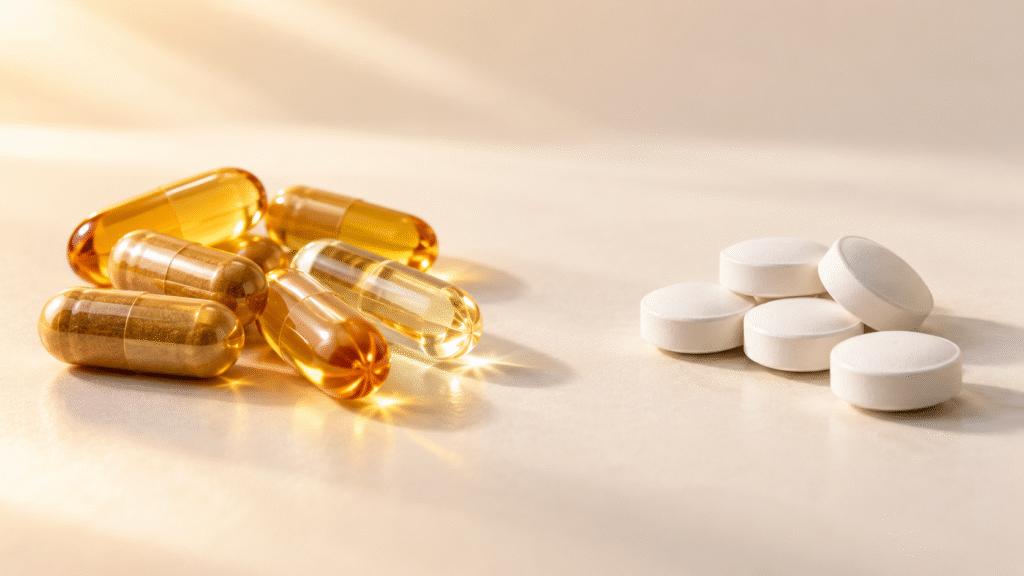
Walk into any pharmacy and most of what is on the shelf is either a capsule or a tablet. Both carry the same medicine to the same place, so why does one product come as a hard shell and another as a pressed disc? The choice is rarely about looks. It changes how a medicine is made, how fast it is ready to work, how easy it is to swallow and what each dose costs to produce.
The short answer
Capsules are usually easier to swallow, hide bitter taste and smell, need fewer added ingredients and are quicker to develop, which makes them a favourite for nutraceuticals, new formulations and smaller batches. Tablets hold a larger dose per unit, can be scored and split, suit complex slow-release coatings and cost less per unit at very high volumes. Neither is better in general: the right choice depends on the ingredient, the dose and the people who will take it.
What is the difference between a capsule and a tablet?
A tablet is made by compressing powder into a solid shape under high pressure. To hold together, the powder needs binders, fillers and lubricants, and many tablets are then coated to make them easier to swallow or to control where in the gut they dissolve.
A hard capsule is a two-piece shell, a longer body and a shorter cap, that is filled with powder, granules, pellets or even another small capsule, then closed. The shell is most often made of hard gelatin, a pure protein that dissolves quickly in the stomach. Because nothing is compressed, the fill can often stay much closer to the pure active ingredient.
| Capsules | Tablets | |
|---|---|---|
| How they are made | Powder or pellets filled into a two-piece shell | Powder compressed under high pressure |
| Swallowing | Smooth, light shell; easier for most people | Can be harder, especially larger uncoated tablets |
| Taste and smell | Fully masked by the shell | Need a coating to mask taste |
| Added ingredients | Fewer: often a filler and a flow aid | More: binders, fillers, lubricants, disintegrants |
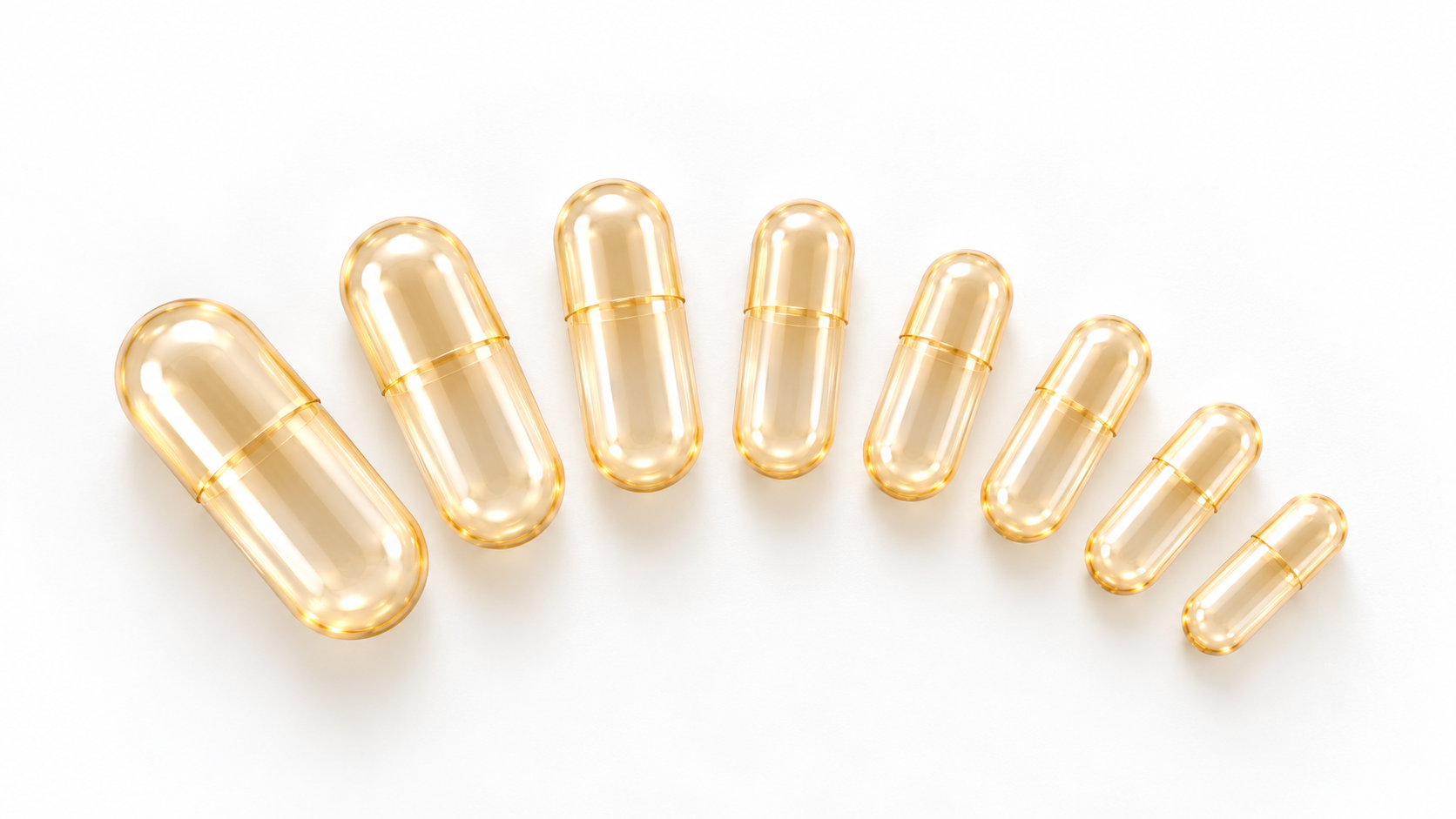
| Dose per unit | Limited by shell volume (size 000 holds about 1.37 ml) | Higher; large doses fit in one unit |
| Splitting a dose | Not possible | Possible with scored tablets |
| Release profile | Usually immediate release; enteric and delayed-release shells exist | Wide range of coatings for slow or extended release |
| Development time | Shorter; fewer formulation steps | Longer; powder must compress well |
| Cost per unit | Slightly higher at very large volumes | Lowest at very large volumes |
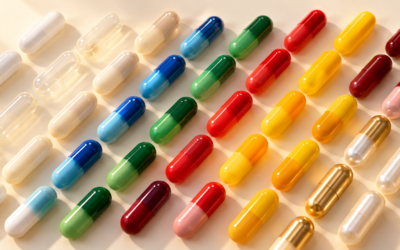
| Looks and branding | Two colours plus printing on cap and body | Colour, shape and embossing |
Advantages of capsules
Easy to swallow
The smooth, rounded shell slides down easily, and many people who struggle with tablets find capsules more comfortable. That matters for daily supplements and long courses of treatment.
No taste, no smellThe shell completely hides bitter, fishy or herbal tastes and smells until the capsule opens in the stomach, which helps people keep taking their medicine.
Fewer excipients
Without compression there is no need for binders. A cleaner label is a real selling point for nutraceutical and herbal brands.
Faster to marketPowders that will not compress well can often go straight into a capsule. Small batches, trial runs and new strengths are simpler to produce, and the shell colours and printing make a product instantly recognisable.
Advantages of tablets
Tablets win when the dose is large, when the patient may need half a dose, or when the medicine must be released slowly over many hours. They are very robust in transport, and on an extremely large production line the cost of each unit is hard to beat. That is why many common painkillers and long-acting prescription medicines are tablets.
Do capsules work faster than tablets?
Often, but not always. A standard hard gelatin shell begins to dissolve within minutes in the stomach, and the loose powder inside is free to disperse straight away. A tablet first has to break apart, which takes longer if it is hard pressed or coated. On the other hand, a tablet made to disintegrate quickly can be just as fast, and some capsules are deliberately designed to release later in the gut.
What finally decides how much of a medicine reaches the blood is the whole formulation: the active ingredient, its particle size and the excipients around it. The dosage form alone does not guarantee better absorption, so always follow the advice of a doctor or pharmacist rather than switching between forms yourself.
Capsule or tablet for your product?
Tick what is true for your formulation. The suggestion updates as you go.
SuggestionTick a few statements to see a suggestion.
A starting point only. Your formulation scientist should confirm the final dosage form.
Which is right for your product?
Choose capsules for nutraceuticals, herbal extracts, probiotics, bitter or smelly ingredients, powders that are hard to compress and products where brand colours matter. Choose tablets for very high doses, products that need splitting and long-acting medicines that rely on complex coatings. If you choose capsules, the next decisions are the shell material and the capsule size that fits your fill weight, and good storage of empty capsules before filling.
Frequently asked questions
Are capsules better than tablets?
Neither is better in every case. Capsules are easier to swallow, mask taste and need fewer excipients; tablets carry larger doses, can be split and suit slow-release coatings. The best form depends on the ingredient, the dose and the patient.
Do capsules dissolve faster than tablets?
A standard hard capsule shell usually starts to dissolve within minutes in the stomach, so capsules often release their contents quickly. A fast-disintegrating tablet can be just as quick, and some capsules are designed to release later.
Can I open a capsule or crush a tablet?
Only if your doctor or pharmacist says it is safe. Many medicines are designed to release slowly or to be protected from stomach acid, and opening or crushing them can change how they work.
Why are capsule shells made of gelatin?
Gelatin forms a strong, smooth shell that seals tightly, is easy to swallow, protects the fill from air and light, and dissolves within minutes in the stomach to release the medicine.
Why do some medicines come only as tablets?
Usually because the dose is too large for a capsule, the tablet needs to be split, or the medicine relies on a special coating to release slowly over many hours.
Planning a capsule product?
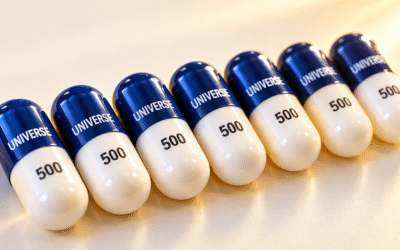
Universe Capsules manufactures empty hard gelatin capsules in many sizes, solid and pearl colours, with custom printing on the cap and body. Tell us about your product and we will help you choose the right size and shell.
Talk to our team