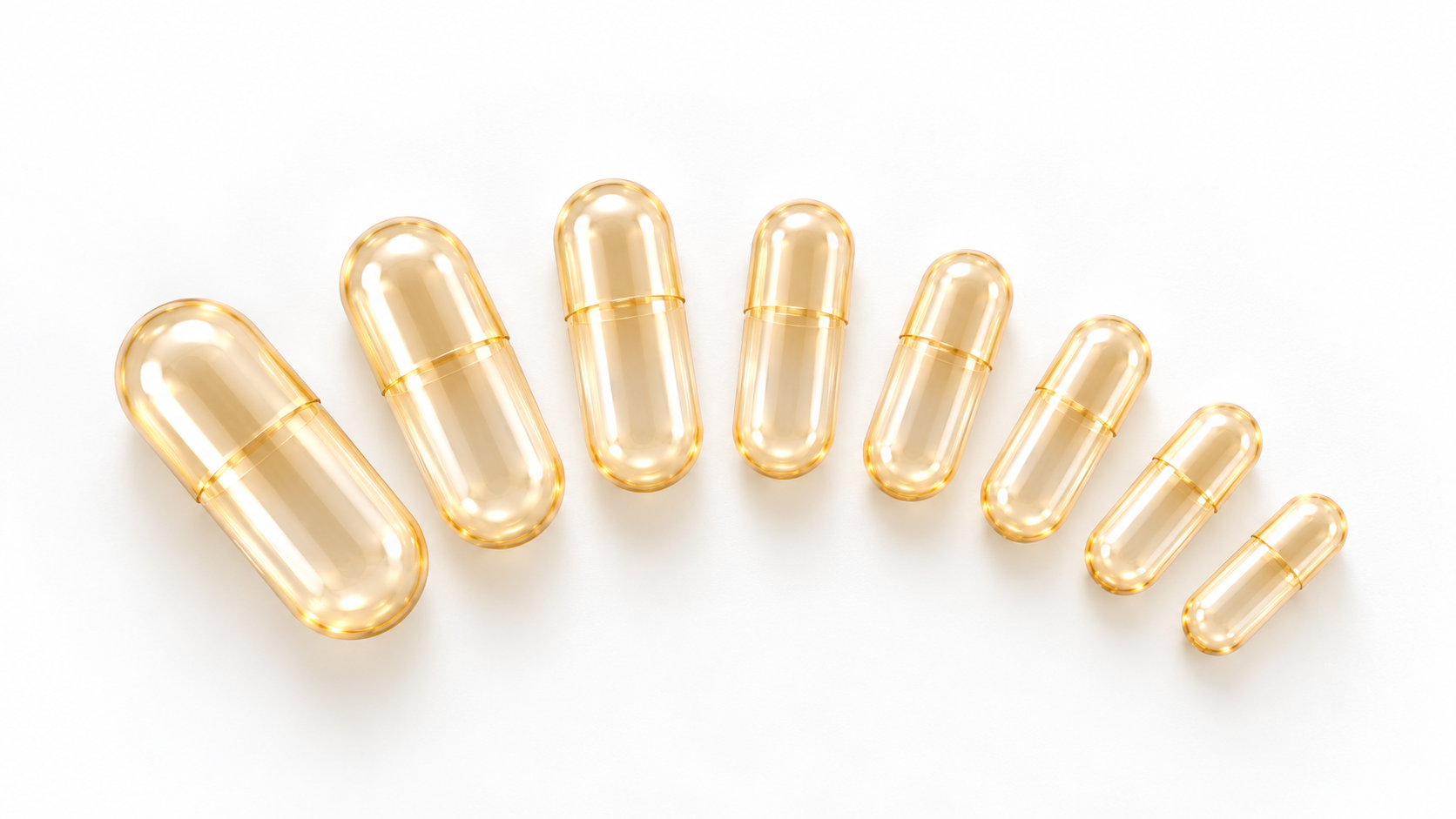
Empty capsules are a small line on your bill of materials, but the wrong supplier can stop a filling line, fail a batch release or delay a launch. Whether you buy for a pharmaceutical plant, a nutraceutical brand or a contract manufacturer, these are the checks that separate a reliable empty hard gelatin capsule supplier from a risky one.
The short answer
Choose a supplier that can show current quality certificates, gives a certificate of analysis with every batch, holds dimensions tightly enough to run on your machines, matches colours exactly on repeat orders, and is clear about minimum order quantity, samples and lead time before you commit. Always test samples on your own filling line.
The 10-point supplier checklist
| Check | What to ask for | Why it matters |
|---|---|---|
| 1. Quality certification | Current GMP and ISO certificates, plus Halal or FSSAI if your market needs them | Shows the plant runs a controlled, audited quality system |
| 2. Pharmacopoeial compliance | Which standards each batch is tested to (IP, USP, BP) | Your own QC release depends on it |
| 3. Certificate of analysis | A CoA for every batch, with results, not just limits | Lets you release capsules without re-testing everything |
| 4. Gelatin source | Gelatin origin and a TSE/BSE-free statement | Required by most regulators and export markets |
| 5. Dimensional consistency | Length and diameter tolerances, and samples for a trial run | Out-of-tolerance capsules jam or fail to close at speed |
| 6. Moisture and packing | Moisture content (13 to 16 percent) and how capsules are sealed and cartoned | Dry capsules crack, damp ones stick; packing protects both |
| 7. Colour matching | How custom shades are matched and coded for repeat orders | Your product must look identical batch after batch |
| 8. Printing | Linear or circular printing, one or two ink colours, artwork process | Branding, dose marking and protection against counterfeits |
| 9. Order terms | Minimum order quantity, sample quantities, lead time | Avoids surprises in planning and cash flow |
| 10. Support and communication | A named contact, fast replies, help with size selection | Problems get solved before they reach your line |
1. Ask for documents before you ask for prices
A good supplier sends certificates, a product specification and a sample certificate of analysis without hesitation. If documents arrive slowly, are out of date, or cannot be matched to the batch you receive, treat that as a warning sign. Check that the certificates name the manufacturing site that will actually make your capsules.
2. Test samples on your own filling line
Capsule sizes are an international standard, so any compliant size 0 capsule fits size 0 tooling. What differs between suppliers is how consistently every capsule sits within tolerance. That is what decides your rejection rate at speed. A specification sheet cannot tell you this, so run a sample batch on your own machine, at your normal speed, before placing a production order.
3. Check moisture, packing and storage advice
Hard gelatin capsules perform best with a moisture content of 13 to 16 percent. Ask how capsules are packed (sealed food-grade polyethylene bags inside lined cartons are typical) and what storage conditions the supplier recommends. Capsules stored below about 30 percent relative humidity become brittle, and above about 65 percent they soften. Our guide on how to store empty capsules covers this in detail.
4. Make sure colours and printing can be repeated exactly
If you use a custom colour or a printed logo, ask how the supplier records it. A reliable manufacturer matches the shade from a physical sample or Pantone reference, assigns it a code, and reproduces it on every repeat order. For printing, check whether they offer linear or circular printing and one or two ink colours. See our printed capsules and custom capsule options.
5. Get order terms in writing
Ask for the minimum order quantity per specification (one combination of size, colour and finish), how many samples you can get, and the lead time for both first and repeat orders. Clear terms up front make planning easier and avoid stock-outs.
Red flags to watch for
No batch CoA
A supplier who cannot give a certificate of analysis for each batch makes your own quality release harder and riskier.
Price far below market
Very low prices often mean lower-grade gelatin, loose tolerances or poor packing that cost more on your line.
Colour drift
Shades that change between orders suggest there is no colour-coding system in place.
No samples
A confident manufacturer is happy for you to test its capsules before you buy in bulk.
Frequently asked questions
What certifications should an empty capsule manufacturer have?
At minimum, GMP certification and an ISO-certified quality system. Depending on your market you may also need Halal certification, FSSAI licensing in India, and testing to IP, USP or BP standards.
How do I compare capsule quality between suppliers?
Compare their certificates of analysis, then run samples from each supplier on your own filling machine at normal speed and compare rejection rates.
Do capsule sizes differ between manufacturers?
No. Nominal dimensions are an international standard. What differs is how tightly each manufacturer holds its tolerances.
Can I get samples before ordering?
From Universe Capsules, yes. We supply samples so you can test them on your own line before you place a production order.
Evaluating Universe Capsules as a supplier?
We manufacture empty hard gelatin capsules in plain, printed, metallic and pearl finishes. Ask us for our certificates, a sample certificate of analysis and free samples for a trial run on your line.
Request documents and samples