Every batch of empty hard gelatin capsules should arrive with a certificate of analysis, or CoA. It is the manufacturer's record that the batch was tested and met its specification. Knowing how to read it helps your quality team release capsules faster and spot problems before they reach the filling line.
The short answer
A CoA lists the batch details, the specification the capsules were tested against, and the actual result for each test, such as identification, dimensions, weight, moisture, disintegration and microbial limits. Check that the batch number matches your delivery, that results are shown rather than just limits, and that every result is within specification.
What a capsule CoA usually contains
| Section | What it tells you | What to check |
|---|---|---|
| Batch details | Product, size, colour or shade code, batch number, manufacture and expiry dates | Matches the labels on the cartons you received |
| Specification reference | The standard used, such as IP, USP or BP, or an agreed in-house specification | Matches what you agreed with the supplier |
| Description and identification | Appearance and a test confirming the shell is gelatin | Result shown as complying |
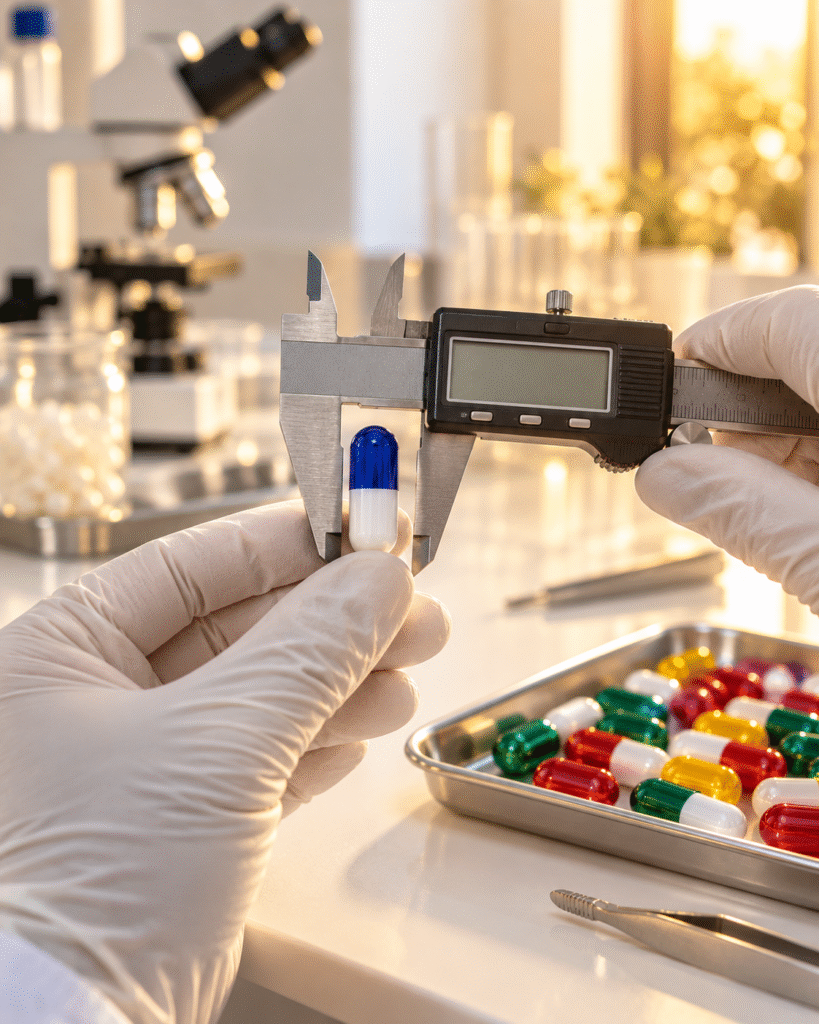
| Dimensions and weight | Length, diameter and average shell weight for the size | Within tolerance; this affects how capsules run on your machines |
| Loss on drying (moisture) | Moisture content of the shells | Typically 13 to 16 percent for hard gelatin capsules |
| Disintegration | Time for shells to break apart at 37 °C | Within the limit; ours are not more than 15 minutes |
| Microbial limits | Total aerobic count, yeasts and moulds, and absence of specified pathogens | Within pharmacopoeial limits |
| Heavy metals and other tests | Other tests required by the specification | Within limits |
| Approval | Name and signature of the authorised quality person, and date | Signed and dated |
Red flags on a certificate of analysis
- Limits only, no results: a CoA should show the actual measured value, not just "complies" next to the limit.
- Batch number mismatch between the CoA and the carton labels.
- Missing tests that your specification requires.
- Unsigned or undated certificates.
- Results right at the limit on every batch, which can mean the process is not well controlled.
How to use the CoA in your own release
Many companies verify a supplier's CoA by testing a few key parameters themselves, such as dimensions, moisture and disintegration, on the first batches. Once results consistently match, they move to reduced testing. Storing capsules correctly after release keeps them in specification; see how to store empty capsules. For more on disintegration, read capsule dissolution and disintegration.
Frequently asked questions
What is a certificate of analysis?
A document from the manufacturer showing the tests performed on a batch and the results, confirming the batch meets its specification.
Does every batch need a CoA?
Yes. Each batch should have its own CoA that matches the batch number on the delivery.
What moisture content should empty gelatin capsules have?
Typically 13 to 16 percent loss on drying, which keeps shells strong but flexible.
Can I get a sample CoA before ordering?
Yes. Universe Capsules can share a sample certificate of analysis and our specification.
Want to see our CoA?
Ask us for a sample certificate of analysis and specification for the size and colour you need.
Request a sample CoA