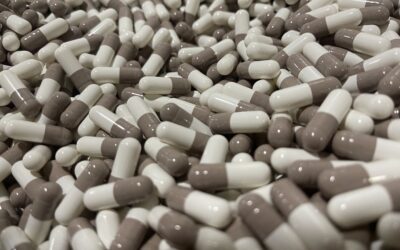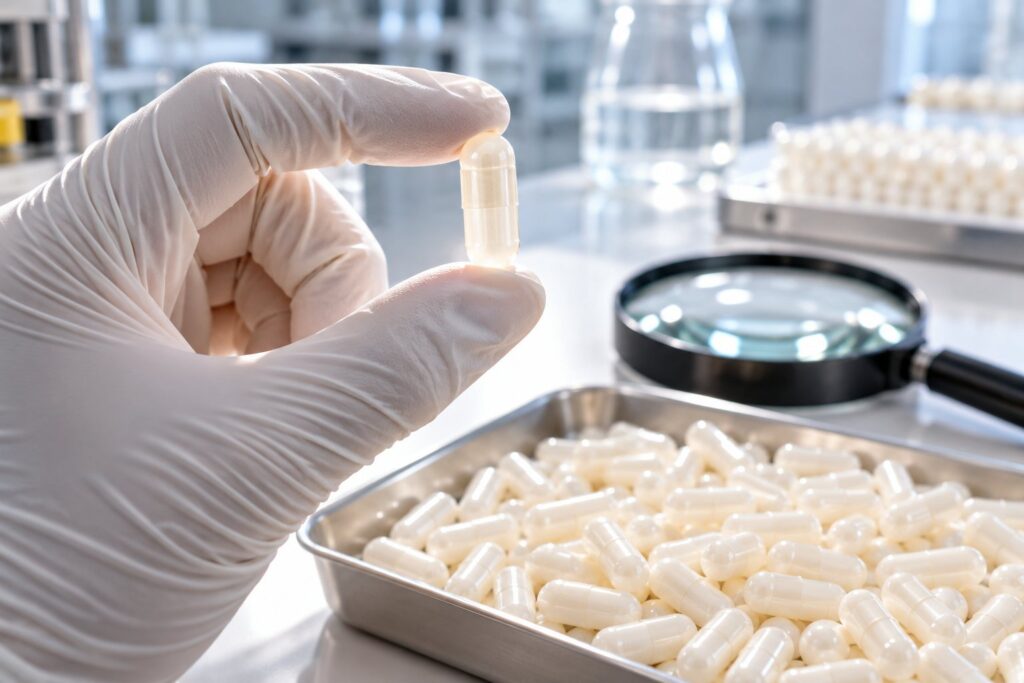
An empty capsule looks simple, but it has to fit a filling machine running at tens of thousands of capsules an hour, protect the medicine inside and dissolve on time in the patient's stomach. Quality control is what makes every capsule in every batch behave the same way. Here is why it matters and what good capsule QC looks like.
The short answer
Quality control keeps capsule dimensions, weight, moisture, appearance and dissolution within specification, so capsules run smoothly on filling machines, protect the product and meet pharmacopoeia standards. Weak QC leads to machine stoppages, split or dented capsules, rejected batches and, at worst, recalls.
Why quality control matters
- Smooth filling: capsules that are out of tolerance jam, fail to separate or fail to lock on the filling machine.
- Patient safety: the shell is in direct contact with the medicine, so purity and microbial quality are essential.
- Correct dose release: capsules must disintegrate within the time set by the pharmacopoeia.
- Brand image: uneven colour, spots or poor printing reach the end customer.
- Regulatory compliance: buyers and inspectors expect documented testing for every batch.
Key quality checks for empty hard gelatin capsules
| Check | Why it matters |
|---|---|
| Raw material testing | Confirms the gelatin, colours and water meet specification before production |
| Dimensions (length, diameter, wall thickness) | Ensures a correct fit on filling machines and a secure cap-body lock |
| Average weight and weight variation | Indicates uniform shell thickness and consistent quality |
| Moisture (loss on drying) | Too dry and capsules become brittle; too moist and they soften or stick |
| Disintegration | Confirms the shell releases the contents within the required time |
| Microbial limits | Protects the product and patient from contamination |
| Visual inspection (AQL sampling) | Finds defects such as holes, splits, dents, bubbles, spots and colour variation |
| Print quality | Checks legibility, position and adhesion of printing on printed capsules |
Common capsule defects that QC catches
- Critical defects: holes, cracks, open or double caps that can leak or fail on the machine.
- Major defects: dents, thin spots, short bodies and telescoped capsules.
- Minor defects: small bubbles, specks or slight shade differences.
Batches are usually inspected against Acceptable Quality Limits (AQL), with the tightest limits for critical defects. For problems on the filling line, see our guide to capsule filling problems and solutions.
Quality does not stop at the factory
Capsules are sensitive to heat and humidity. Good packaging, batch coding and correct storage keep them within specification until they are filled. See how to store empty capsules.
What to ask your capsule supplier
- A certificate of analysis for each batch. See how to read a certificate of analysis.
- The specification and tolerances for your size.
- Gelatin certificates, including TSE/BSE, Halal and Kosher where needed.
- How batches are coded and traced.
Universe Capsules manufactures empty hard gelatin capsules under WHO-GMP norms, tested to USP, BP and IP standards. Every batch is tested against defined quality parameters before packing and is batch coded for full traceability. Read more about our manufacturing.
Frequently asked questions
What is the most important capsule quality test?
No single test is enough. Dimensions, moisture, disintegration, microbial quality and visual inspection work together.
What moisture should empty gelatin capsules have?
Typically 13 to 16 percent loss on drying.
What is AQL in capsule inspection?
Acceptable Quality Limit: the maximum number of defects allowed in a sample before a batch is rejected, set separately for critical, major and minor defects.
Need capsules you can rely on?
Ask for our specification and a sample certificate of analysis for your size and colour.
Contact us