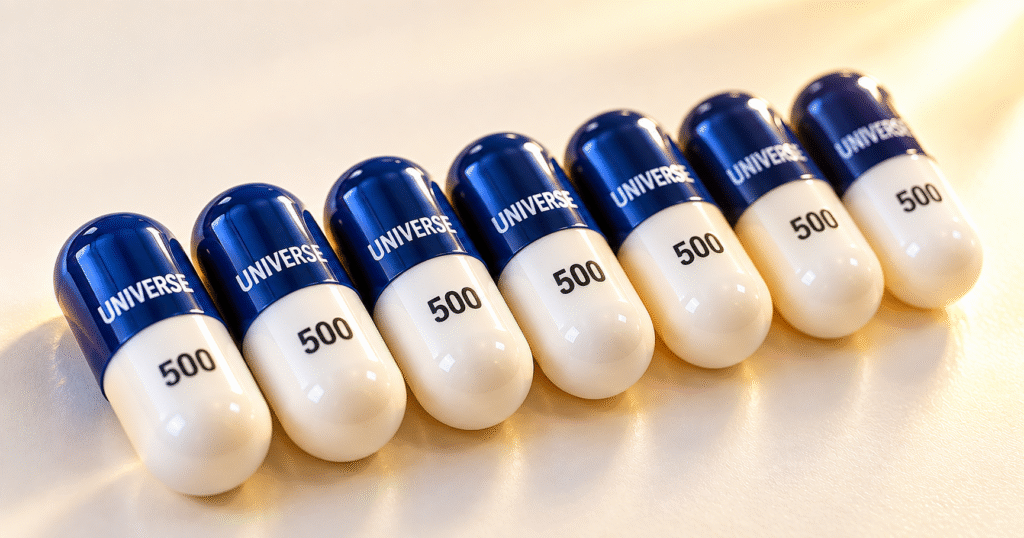
Counterfeit medicine is not a packaging problem. Cartons and blister foils are copied routinely and convincingly. Once the outer packaging is off, the capsule itself is the last thing standing between a patient and a fake, which is why printing on the shell has quietly become a security measure rather than a branding one.
Why the capsule is the hard part to fake
A counterfeiter can print a carton on any commercial press. Printing legibly on a curved gelatin shell, at production speed, in registered position, needs dedicated capsule printing equipment and a supply of correctly sized shells in your exact colour combination. That is a much higher barrier than a print shop.
It also gives inspectors and pharmacists something checkable at the point of dispensing, without laboratory equipment. A capsule that should read consistently and does not is a signal anyone can act on.
Print your own capsule
Type your product name and see it applied, in both printing orientations.
Linear printing runs along the length of the shell. Circular printing wraps around it. Most products use one or the other consistently, which is itself part of the security value.
What actually makes printing hard to copy
Registration
Text that sits in the same position on every capsule, every batch. Inconsistent placement is one of the most common giveaways on counterfeit product, because holding position at speed is the expensive part.
Two-colour printing
Different ink on cap and body means two passes in register. It roughly doubles the equipment burden for anyone trying to reproduce it, for a modest cost increase to you.
An unusual colour pairing
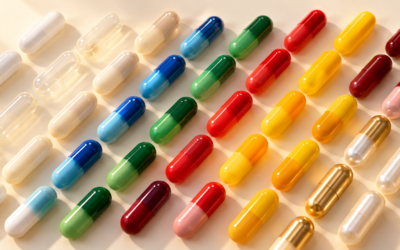
A shell combination that is not a stock colour is quietly effective. A counterfeiter has to source matching shells before they can even begin printing.
Edible ink specification
Pharmaceutical printing inks are regulated and traceable. Fakes frequently use whatever is available, which is detectable on analysis even when it looks right.
The dispensing benefit, which is not about counterfeits at all
There is a second reason printing earns its cost. Once a capsule leaves its blister or bottle, an unprinted shell carries no information. Printed strength and product name reduce dispensing errors and make identification possible if a patient arrives with loose medication and no packaging. Several markets now expect this as a matter of course.
Practical questions before you specify printing
Three things are worth settling early with your supplier, because they affect both cost and lead time:
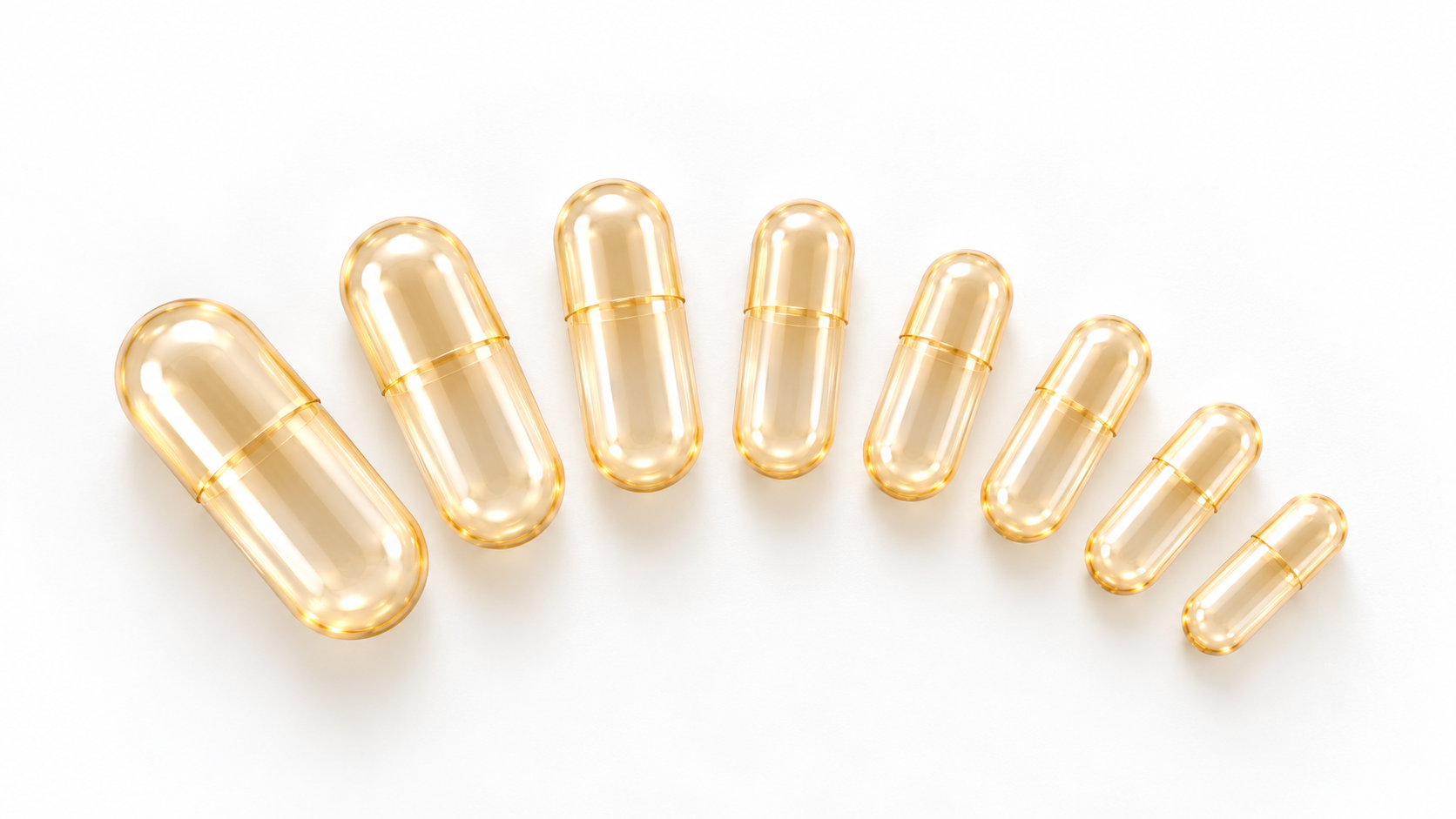
How much text will fit. The printable band on a capsule is smaller than people expect, particularly on sizes 2 and below. Shorter marks stay legible; long ones shrink until they are not worth printing.
Ink contrast against your shell. White ink on a dark shell and black on a light shell are the reliable combinations. Mid-tone ink on a mid-tone shell photographs and inspects poorly.
Whether the artwork is fixed. Changing printed text later means new tooling setup, so it is worth confirming the final wording before the first production run rather than after it.
Talk to us about printed capsules
We print in linear and circular orientation, in single and two-colour, across our full range of shell colours. Send us your artwork and we will produce a printed sample for approval before any production run.
Request a printed sample